Oséias D. Farias
ML Engineer · MSc Electrical Eng. & Applied Computing · Researcher @ UFABC & UFPA

Backend developer (Python · Java · Quarkus · AWS) and control systems researcher. MSc in Electrical Engineering @ UFABC (Artificial Antifragility / FPGA) and MSc in Applied Computing @ UFPA (Deep Learning). Currently building Lunella — an AI-powered customer automation platform at Verzel. Author of Synapsys · ORCID: 0009-0005-4960-0271 · Lattes: lattes.cnpq.br/2199717385351494

View all authors

PID with Anti-Windup: Theory, Tuning and Experimental Validation

· 5 min read
Oséias D. Farias
ML Engineer · MSc Electrical Eng. & Applied Computing · Researcher @ UFABC & UFPA

Integral windup is one of the most common failure modes in deployed PID controllers. This post covers the problem from first principles, derives the back-calculation anti-windup scheme, shows how Synapsys implements it, and validates the design against a simulated second-order plant.
From Model to Hardware: MIL → SIL → HIL in Three Steps

· 4 min read
Oséias D. Farias
ML Engineer · MSc Electrical Eng. & Applied Computing · Researcher @ UFABC & UFPA

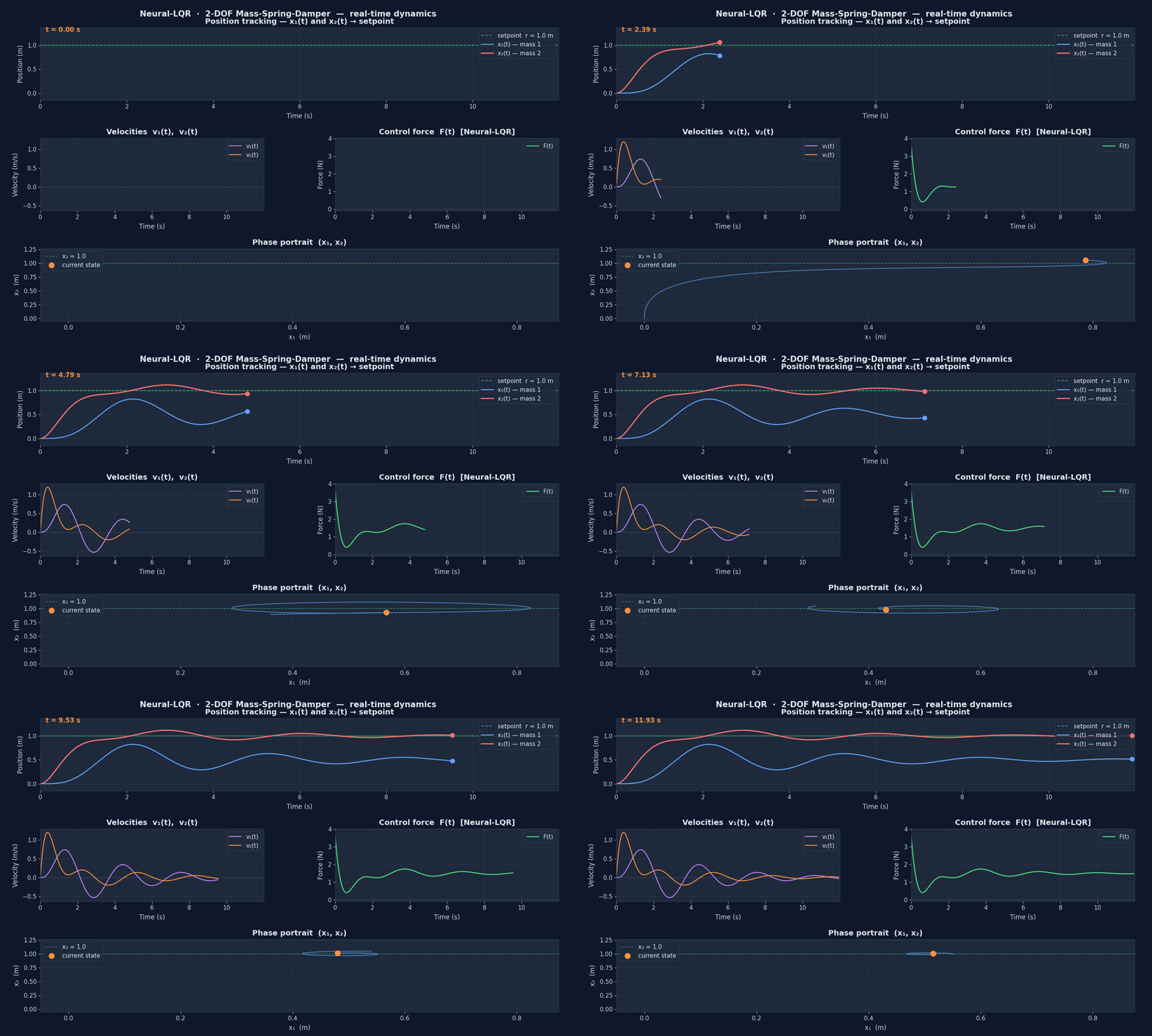
SIL Neural-LQR

MIL → SIL → HIL is the standard V-model progression for embedded control: simulate everything first, then replace the plant model with real hardware one layer at a time. In most frameworks this requires rewriting large parts of the control loop. In Synapsys the transition is a one-line swap because the transport layer is fully abstracted from the algorithm.

MIMO Control of a Quadcopter with Neural-LQR

· 4 min read
Oséias D. Farias
ML Engineer · MSc Electrical Eng. & Applied Computing · Researcher @ UFABC & UFPA

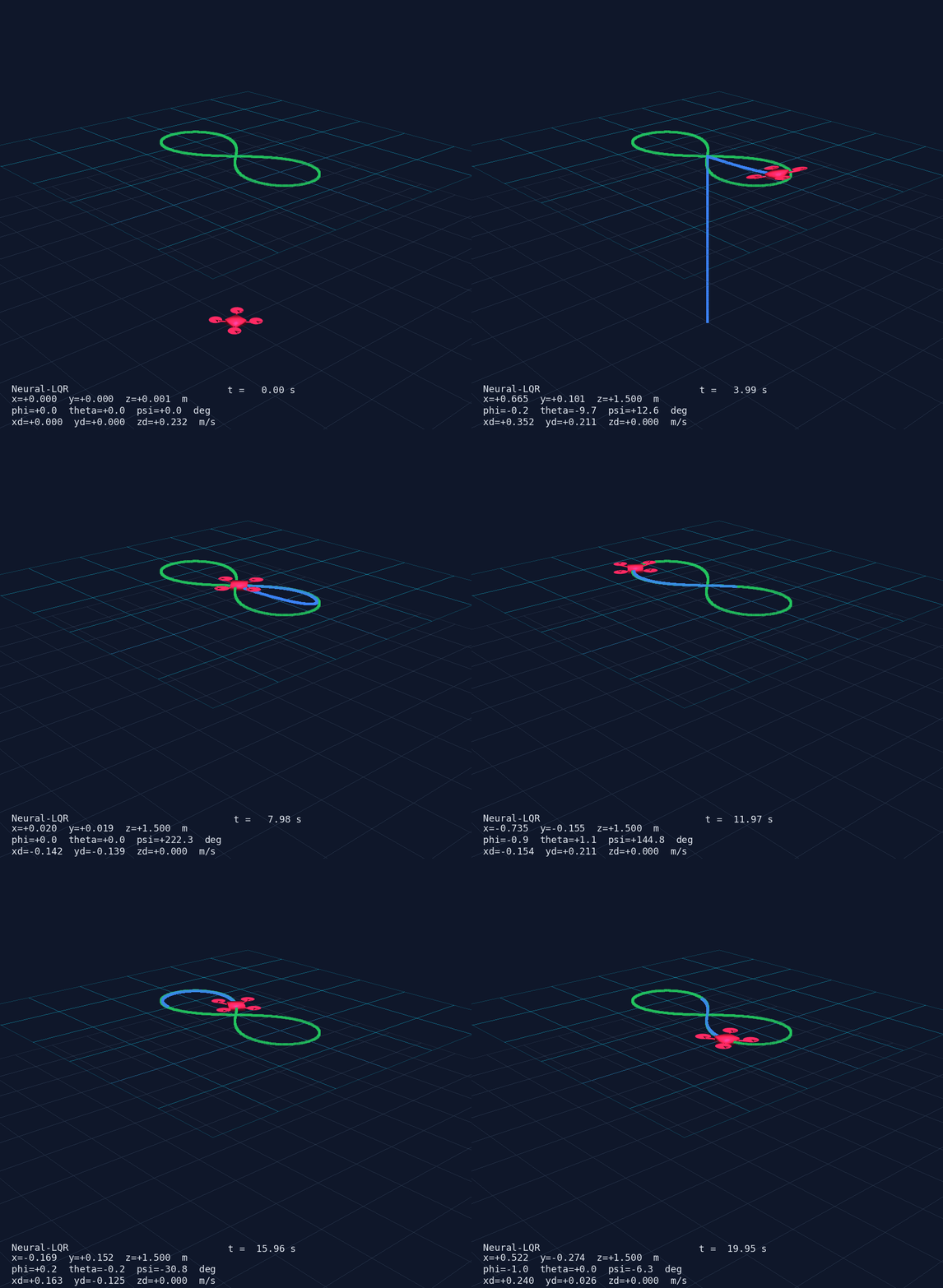
Quadcopter 3D tracking

A quadrotor has four rotors, six rigid-body degrees of freedom, and fully coupled rotational dynamics — it is the MIMO benchmark of aerial robotics. This post walks through the complete design pipeline: physics → linearisation → LQR → Neural-LQR residual → 3D simulation.

Stabilising an Inverted Pendulum with LQR

· 4 min read
Oséias D. Farias
ML Engineer · MSc Electrical Eng. & Applied Computing · Researcher @ UFABC & UFPA

The inverted pendulum is the canonical benchmark of nonlinear control — unstable, simple enough to model analytically, yet rich enough to reveal the full LQR design workflow. This post derives the linearised model from physics and shows how to stabilise it with Synapsys in a few dozen lines of Python.